Few things are more heartbreaking than discovering a cherished family photo that has been torn, scratched, or faded beyond recognition. Whether it is a wedding portrait from the 1950s or a snapshot of grandparents who have long since passed, damaged photos carry irreplaceable emotional weight. The good news is that modern photo restoration techniques have advanced to the point where even severely damaged images can be brought back to life.
Photo restoration is a broad term that covers a wide range of repair work. Professionals who specialize in digital photo repair can address tears, creases, water stains, mold damage, fading, discoloration, scratches, missing pieces, and even photos that have been written on with ink or marker. The process involves high-resolution scanning followed by meticulous digital retouching using advanced software tools.
Tears and rips are among the most common issues technicians encounter. Even if a photo has been torn into multiple pieces, skilled restoration artists can digitally reassemble and reconstruct the image. Scratches, whether shallow surface marks or deep gouges, can also be removed without any trace. Fading is another very common problem, especially with older photographs from the mid-twentieth century. Color photos from the 1970s and 1980s are notorious for shifting toward orange or red tones over time. A photo restoration specialist can rebalance the colors and recover detail that appears to be completely lost.
Water damage and mold are trickier issues but are still very much repairable in most cases. If a photo has been soaked, the emulsion layer can stick, peel, or crack. A professional using digital photo repair techniques can reconstruct these lost areas by studying the surrounding image content and carefully filling in the gaps. In Houston, TX, where humidity and flooding are persistent concerns, water-damaged photo restoration is an especially common and important service.
How Does the Digital Photo Restoration Process Work?
The restoration process begins with digitization. Before any digital photo repair work can be done, the original physical image must be converted into a high-resolution digital file. This is typically done using a flatbed scanner capable of capturing fine detail at 600 DPI or higher. For older media formats, slide scanning services and negative to digital transfer are essential first steps. Many families have boxes of old slides or film negatives sitting in closets that contain images they have never even seen printed. Converting these materials through slide scanning services or negative to digital transfer unlocks that hidden archive and makes restoration possible.
Once the image is digitized, the restoration artist begins the repair work inside professional editing software. Layer by layer, they address each type of damage. Tears are filled in using surrounding visual information. Scratches are cloned out using nearby textures. Faded areas are brought back through careful tonal adjustments. Color correction is applied to restore natural skin tones, accurate backgrounds, and true-to-life hues. For severely damaged images, this process can take many hours of meticulous work.
The final step is producing the restored image as a high-resolution digital file that can be reprinted, shared digitally, or used for media preservation archiving. Many services also offer printing on archival-grade paper that is designed to last for over one hundred years without fading. In Houston, TX, residents have access to several skilled photo restoration providers who offer this full-service workflow from scanning to final print.
What Role Do Slide Scanning Services and Negative to Digital Transfer Play?
Slide scanning services and negative to digital transfer are closely related to photo restoration but serve a distinct and equally important purpose. Millions of American families documented their lives on 35mm film slides and negatives throughout the 1950s, 1960s, 1970s, and 1980s. These formats were incredibly popular before digital cameras arrived, and they actually produce remarkably high-quality images when properly converted.
The challenge is that most households no longer own a slide projector or film viewer, and the slides themselves degrade over time. Kodachrome slides, for example, are known for their durability, but even they can suffer from mold, color shifting, and physical damage if stored improperly. Negative to digital transfer services use specialized film scanners to capture every grain of detail from these old formats and produce crisp, high-resolution digital files.
Once those files exist, they become candidates for digital photo repair if needed. A scratched negative, for instance, can be digitized and then restored digitally so that the final image looks pristine. This combination of slide scanning services and photo restoration is one of the most powerful tools available for families serious about media preservation. In Houston, TX, where many families have lived for generations and accumulated large collections of physical media, these services are in high demand.
Why Media Preservation Matters More Than Ever
Media preservation is not just about fixing old photos. It is about ensuring that your family’s visual history survives for generations to come. Physical photographs, slides, negatives, and even home movies are all subject to deterioration. Heat, humidity, light exposure, and simple aging all contribute to the gradual destruction of physical media. Once a photo is gone, it is gone forever unless a digital copy already exists.
This is why combining photo restoration with a broader media preservation strategy is so important. By digitizing your entire physical collection through services like slide scanning services and negative to digital transfer, and by repairing any existing damage through professional digital photo repair, you create a permanent digital archive that can be backed up, copied, and shared indefinitely. Cloud storage, external hard drives, and printed archival copies all serve as layers of protection against future loss.
For families in Houston, TX, the risks are especially real. Hurricanes, flooding, and high humidity are constant threats to physical media. The devastating floods that have hit the Houston area in recent years have destroyed countless irreplaceable family photos. Many restoration professionals in the area have built their practices specifically around helping flood-affected families recover what they can from waterlogged collections. Investing in media preservation before disaster strikes is always the smarter choice, but professional photo restoration can still recover a great deal even after damage has occurred.
The emotional value of family photography cannot be overstated. A single photograph of a grandparent, a childhood birthday party, or a long-ago family reunion can serve as a powerful anchor to identity and memory. When those images are damaged, the loss feels personal and profound. Photo restoration gives families the chance to reclaim those memories and pass them on in their best possible form.
Conclusion
Whether you are dealing with a single torn portrait or boxes of deteriorating slides and negatives, professional photo restoration, digital photo repair, slide scanning services, and negative to digital transfer can help you recover and preserve your family’s most important visual memories. Families in Houston, TX have access to skilled specialists who understand both the technical side of media preservation and the deeply personal nature of the work. Do not wait until more damage occurs. The sooner you begin the restoration and preservation process, the more of your history you can protect.
Need Media Preservation Services Near You?
Here at International Video Tape Copy, we take pride in being a family-owned business since 1979, and we’re dedicated to providing top-notch audio and video services. With over four decades of expertise, we’ve continuously stayed ahead of the curve in AV technology to ensure the highest quality for our customers. Whether you’re looking to preserve precious memories or need fast, reliable service, we’re here for you. Reach out to us today, and let our experienced team take care of all your audio and video needs with the best service and turnaround times in Texas!
If you have been sitting on a box of old VHS tapes, camcorder cassettes, or Super 8 reels, you have probably started looking into getting them digitized. The options seem simple at first: send your tapes to an online mail-in service or take them to a local shop. But once you start comparing prices, something feels off. The online services that advertise affordable video transfer rates often end up costing far more than expected. For families in Houston, TX, choosing a local VHS to digital provider can actually save money in the long run.
Here is a breakdown of why that price gap exists and what you should know before handing over your irreplaceable memories.
The Illusion of Low Base Prices
Online video transfer companies are skilled at presenting a low entry price to grab your attention. You might see an ad promising transfers starting at a few dollars per tape, and it sounds reasonable. But that number rarely reflects what you will actually pay when the order is finalized.
These services operate on a volume model. They process thousands of tapes every week from customers all across the country, which means their pricing structure is built around squeezing profitability from add-ons and upgrades. Want your footage in a specific format? That costs extra. Need the tapes returned after digitizing? Add a shipping fee. Want higher resolution output? There is a premium tier for that.
For Houston residents comparing upfront digitizing costs, the advertised price from an online service and the final invoice can look dramatically different. A job quoted at $50 online can easily climb past $120 once all the necessary options are selected. Local shops, by contrast, tend to give you a straightforward quote that covers the actual work being done without padding it with optional upgrades that feel mandatory.
Hidden Fees in Mail-In Video Services
One of the biggest financial traps for customers is the hidden fees in mail-in video services. These charges are often buried in the terms and conditions or only revealed during checkout. Understanding what to watch for can save you real money.
Shipping costs are the most obvious hidden expense. You have to pay to send your tapes in, and many services charge separately for return shipping. If you have a large collection, shipping alone can add $20 to $40 or more to your total.
Then there are handling fees. Some online services charge a per-order processing fee that applies regardless of how many tapes you submit. Others have minimum order requirements, meaning you might be forced to pay for more than you actually need.
Storage or output fees are another common surprise. Many services default to storing your digital files on their own cloud platform, which requires a subscription to access long-term. If you want the files on a USB drive or DVD, that is typically an additional cost. Some customers do not realize until after the transfer is complete that downloading their own footage requires a paid membership.
For a family in Houston, TX trying to digitize a modest collection of home movies, these fees add up quickly. What looked like an affordable video transfer option on the surface becomes an expensive ordeal once every line item is tallied.
The Value of Face-to-Face Service
There is something that online services simply cannot replicate: the ability to walk into a shop, hand over your tapes, and have a real conversation with the person doing the work. Local VHS to digital providers in Houston offer a level of personalized service that matters a great deal when you are trusting someone with family memories.
When you work with a local shop, you can ask questions directly. You can find out exactly what format your files will be delivered in, how the technician handles degraded or damaged tapes, and what happens if something goes wrong. You get answers in plain language from a real person, not a FAQ page or a customer service chatbot.
This transparency extends to pricing as well. A reputable local shop in Houston will give you a clear quote upfront. There are no hidden fees waiting to ambush you at checkout. The price you agree to is the price you pay, and that honesty is worth a great deal when you are making a decision about preserving irreplaceable footage.
Local shops also tend to treat each tape as an individual project rather than one unit in a massive production line. That care and attention can make a real difference in the quality of the final transfer, especially with older or more fragile media.
Turnaround Time and the Real Cost of Waiting
When you mail your tapes to an online service, you are surrendering them for weeks at a time. Most major mail-in services have turnaround windows that range from three weeks to two months depending on their current volume. During that period, your tapes are sitting in a warehouse somewhere outside of Texas, completely out of your control.
This waiting period has a real cost that does not show up on any invoice. If you are digitizing tapes for a family reunion, a memorial service, or a personal project with a deadline, a six-week wait is not just inconvenient, it can make the whole effort worthless.
Local video transfer shops in Houston typically offer much faster turnaround times. Many can complete a standard job within one to two weeks, and some offer rush services for time-sensitive projects. That speed has genuine value, and it is rarely factored into the price comparison people make when they first start shopping around.
Beyond timing, there is the issue of risk. Every day your tapes spend in transit or sitting in a fulfillment center is another day something could go wrong. Packages get lost, tapes get mislabeled, and large-volume operations make mistakes. Keeping your tapes local dramatically reduces that risk.
Long-Term Cost Considerations for Houston Families
When people compare online services to local shops, they usually focus on the per-tape price. But the total cost of a video transfer project includes more than that single number. It includes the time you spend coordinating shipping, the frustration of navigating a customer service system if something goes wrong, and the potential cost of re-doing work that did not meet your expectations.
Affordable video transfer should mean affordable in every sense of the word, not just the starting price on a website. A local shop in Houston, TX provides value that goes beyond the invoice. You get faster service, direct communication, greater accountability, and a finished product that you can review and adjust if needed before you ever leave the building.
Many Houston families who have tried both approaches report that the online experience, while occasionally cheaper on paper, often left them frustrated with the results. File quality, format compatibility, and customer support are all areas where local providers tend to outperform the big mail-in operations.
Supporting a local Houston business also means putting money back into the community. That is a consideration more and more consumers are factoring into their decisions as the value of local commerce becomes clearer.
Conclusion
Online video transfer services may look like the budget-friendly option at first glance, but the hidden fees in mail-in video services, longer wait times, and lack of personal accountability often make them more expensive in practice. For anyone in Houston looking for local VHS to digital conversion with honest upfront digitizing costs and real customer service, a local shop is almost always the smarter choice. Do your homework, ask for a full quote, and keep your memories close to home.
Need Media Preservation Services Near You?
Here at International Video Tape Copy, we take pride in being a family-owned business since 1979, and we’re dedicated to providing top-notch audio and video services. With over four decades of expertise, we’ve continuously stayed ahead of the curve in AV technology to ensure the highest quality for our customers. Whether you’re looking to preserve precious memories or need fast, reliable service, we’re here for you. Reach out to us today, and let our experienced team take care of all your audio and video needs with the best service and turnaround times in Texas!
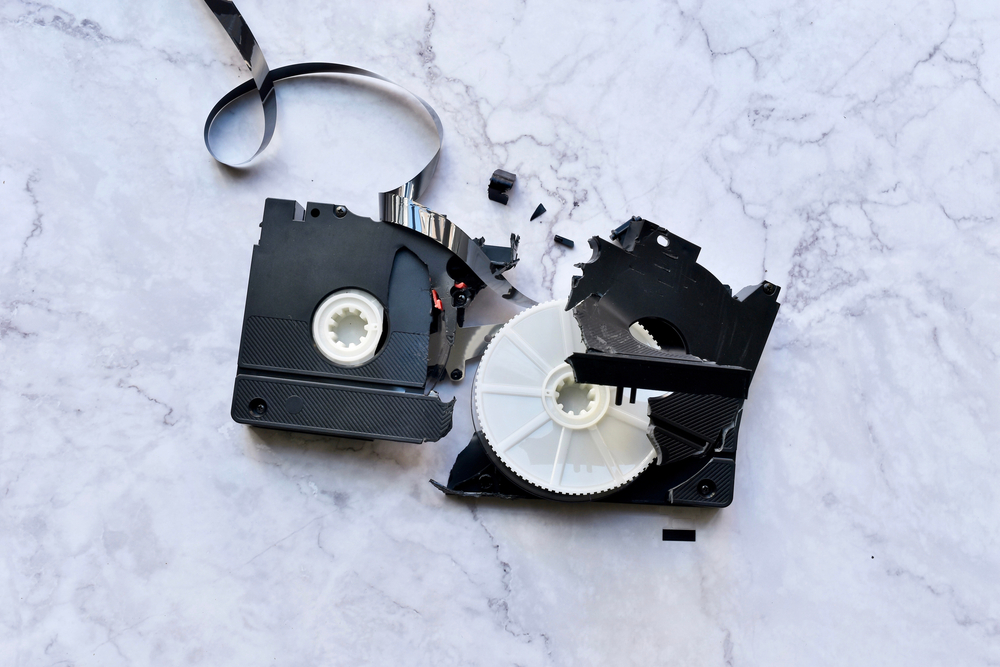
The good news is that a broken VHS tape is not automatically a lost cause. With the right expertise and equipment, many tapes that appear completely destroyed can still yield recoverable footage. The bad news is that not every recovery method is created equal, and mail-in kit services often fall far short of what professional tape restoration services can actually deliver.
Understanding what can and cannot be saved starts with knowing what kinds of damage tapes typically suffer. From physical breaks to environmental degradation, each type of damage requires a different approach, and some require a level of care that simply cannot be replicated at home or through a generic mail-in process.
Why Mail-In Kits Often Fail at Recovery
The appeal of a mail-in digitizing kit is obvious. You pack up your tapes, ship them off, and wait for a digital file to arrive in your inbox. For tapes that are in decent condition, this can work reasonably well. But for tapes that are genuinely damaged, the mail-in model introduces several serious problems before recovery even begins.
The first problem is transit. A tape that has a fragile splice, a cracked housing, or deteriorating oxide coating can sustain additional damage just from being jostled in a shipping box. Mail-in services rarely inspect tapes for structural integrity before attempting playback. They often run tapes through automated equipment designed for healthy media, and a damaged tape fed into that kind of machine can snap, shed oxide, or jam entirely.
The second problem is triage. When you hand your tape to a local specialist in person, there is an opportunity for a real conversation about what the tape has been through. A trained technician can visually inspect the tape, check the reels, and make a judgment call before any playback is attempted. Mail-in operations are typically high volume and low touch. There is no technician holding your tape up to the light and deciding whether it needs to go through a baking process before anything else happens.
The third problem is accountability. If a mail-in service damages your tape further during the recovery attempt, you may have little recourse. Distance makes it difficult to verify what actually happened, and many mail-in services limit their liability explicitly in their terms of service.
For anyone dealing with genuinely damaged media, whether that means a snapped tape, a moldy video tape, or a brittle film reel, proximity to an experienced technician is not a luxury. It is a necessity.
Understanding the Types of Damage That Require Professional Intervention
Not all tape damage looks the same, and not all of it responds to the same treatment. Here is a breakdown of the most common categories and why each one demands hands-on expertise.
Physical breaks are perhaps the most obvious form of damage. A tape that has snapped in two can sometimes be repaired using a splicing block and specialized adhesive tape. The repair has to be precise. If the splice is even slightly misaligned, the repaired section will cause playback issues or jam the heads of the playback machine. Attempting to repair broken VHS tape without proper tools and experience typically results in a worse break than the original.
Tape shed, which happens when the magnetic oxide coating begins to flake away from the polyester base, is a different challenge entirely. This condition is common in tapes that were stored in humid or fluctuating temperature environments. Playing a tape that is actively shedding will deposit oxide on the playback heads and can destroy the very footage you are trying to recover. Professional technicians handle this by baking the tape at a carefully controlled temperature, a process that temporarily re-bonds the oxide layer and allows for a single playback window during which the footage must be captured.
Mold is one of the most unsettling forms of tape damage, and it is also one of the most misunderstood. Moldy video tape cleaning is not simply a matter of wiping the surface with a cloth. Mold spores penetrate the tape layers and can cause the tape to stick together or to the reel. Improper cleaning can smear the mold deeper into the tape structure or physically abrade the oxide coating. Professionals use specialized cleaning machines and controlled environments to address mold without causing further damage. This work should never be attempted with household cleaning products.
Warping and deformation occur when tapes have been stored improperly, especially in extreme heat. A warped reel may not track correctly during playback, leading to distorted or unrecoverable footage. In some cases, gentle reshaping is possible. In others, the damage is permanent. Only an experienced technician can assess which situation applies.
Recover Old Film Reels: A Different Challenge Entirely
While much of the conversation around damaged media focuses on VHS and magnetic tape formats, many families and businesses also have old film reels sitting in closets, attics, or storage units. Attempting to recover old film reels is a task that requires entirely different equipment and expertise than magnetic tape restoration.
Film, particularly older Super 8 and 16mm formats, becomes brittle with age. The sprocket holes that allow film to move through a projector or scanner can tear easily if the film is advanced under tension. Older nitrate-based film stock presents an additional concern due to its chemical instability, and it should only be handled by professionals who are equipped to do so safely.
Like magnetic tape, film can also suffer from mold, vinegar syndrome (a chemical breakdown that produces an acidic odor and causes warping), and color fading. Each of these conditions requires a specific remediation approach before scanning can even begin. Trying to run degraded film through a projector at home is one of the fastest ways to destroy irreplaceable footage permanently.
Professional tape restoration services that handle film typically use frame-by-frame scanners that can capture footage even from film with minor physical damage. Some facilities also offer color correction and stabilization as part of the digitization process, giving restored footage a quality that goes well beyond what a simple transfer would produce.
What to Look for in a Professional Tape Restoration Service
Whether you are located in Houston or anywhere else across the country, finding the right professional for damaged media recovery involves asking a few key questions. Does the facility have experience specifically with damaged and degraded tapes, or do they only handle tapes in good condition? Do they offer in-person consultations before any work begins? Do they have the equipment for tape baking, mold remediation, and splicing in-house, or do they outsource that work?
Turnaround time matters too, but it should not be the primary factor when your media is damaged. A service that rushes through a damaged tape in the name of efficiency is taking risks with your footage. Recovery work on compromised media takes time, and a reputable professional will tell you that upfront.
Ask about their process for handling tapes that cannot be recovered. A trustworthy service will be honest with you about the limits of what is possible rather than taking payment for work that yields no usable result.
Conclusion
A broken or degraded tape is not automatically a lost cause, but it is also not a project for a generic mail-in service or a DIY kit purchased online. From snapped magnetic tape to moldy video tape cleaning and the recovery of fragile film reels, the work of saving damaged media requires trained hands, specialized equipment, and professional judgment. The memories stored on those tapes deserve that level of care. Do not let convenience compromise your last chance at recovering them.
Need Media Preservation Services Near You?
Here at International Video Tape Copy, we take pride in being a family-owned business since 1979, and we’re dedicated to providing top-notch audio and video services. With over four decades of expertise, we’ve continuously stayed ahead of the curve in AV technology to ensure the highest quality for our customers. Whether you’re looking to preserve precious memories or need fast, reliable service, we’re here for you. Reach out to us today, and let our experienced team take care of all your audio and video needs with the best service and turnaround times in Texas!
Analog media holds a special place in our hearts. The grainy warmth of a Super 8 film reel, the satisfying click of a VHS cassette sliding into a player, the quiet hiss before a home movie begins, these are the sounds and textures of memory. But unlike digital files that can be copied endlessly without degradation, analog media is physical. It ages, warps, fades, and eventually fails. Understanding how long your tapes and film reels will last, and what threatens them, is the first step toward protecting the stories they contain.
Whether you are storing old wedding footage in a Houston attic or archiving family film reels in a climate-controlled closet, the science of analog decay applies to you. And if you have ever wondered how long do VHS tapes last in Houston humidity, the answer is both sobering and urgent.
The Fundamental Difference Between Film and Magnetic Tape
Before diving into lifespans, it helps to understand what film and tape actually are, because their physical makeup determines how they deteriorate.
Photographic film, whether 8mm, Super 8, or 16mm, records images through a chemical reaction involving silver halide crystals suspended in a gelatin layer coated onto a plastic or acetate base. The image itself is essentially a physical silver structure embedded in the film. This makes film remarkably stable under the right conditions. Well-stored black-and-white film has lasted well over a century in some archival collections.
Color film introduces dye couplers that are more vulnerable to fading, but even so, properly stored color film from the 1960s and 1970s can still be scanned today with acceptable results. The enemies of film are moisture, which causes the gelatin layer to swell and warp, and the infamous vinegar syndrome, a chemical breakdown of acetate base stock that releases acetic acid and causes the film to shrink, buckle, and become brittle.
Magnetic tape, which includes VHS, Betamax, Hi8, MiniDV, and audio cassettes, works entirely differently. A thin magnetic coating is applied to a polyester or mylar base, and information is stored as magnetic patterns in that coating. The problem is that the binder holding the magnetic particles to the base can absorb moisture over time, causing a condition called sticky shed syndrome. When this happens, the tape literally sheds its magnetic coating during playback, and the information encoded in that coating is gone forever.
How Long Does Each Format Actually Last?
This is where the conversation gets practical. Lifespans for analog media are not guaranteed numbers but rather estimates based on storage conditions and manufacturing quality.
Photographic film stored at around 65 degrees Fahrenheit and 40 percent relative humidity can theoretically last 100 years or more for black-and-white film. Color film under the same conditions may retain acceptable quality for 50 to 100 years, depending on the dye chemistry used. However, film stored in a hot attic in Texas, where summer temperatures routinely exceed 100 degrees Fahrenheit and humidity swings wildly, could degrade significantly within a decade or two.
Magnetic tape formats have a shorter expected lifespan under ideal conditions. Most archivists estimate that VHS tapes have a lifespan of 10 to 25 years under proper storage. Some sources push that upper limit toward 30 years if conditions are pristine. The problem is that very few people store their VHS tapes in pristine conditions.
If you have been asking how long do VHS tapes last in Houston humidity, the realistic answer is often closer to the lower end of that range, or even shorter. Houston is one of the most humid cities in the United States, with average relative humidity frequently exceeding 75 percent and sometimes climbing past 90 percent during summer months. Humidity is the number one enemy of magnetic tape. Moisture weakens the binder holding the magnetic particles in place, accelerates mold growth on the tape surface, and causes the polyester base to stretch. A VHS tape that might last 25 years in Colorado could fail within 10 to 15 years in Houston without proper climate control.
The Specific Threat of Heat and Humidity to Tape
Houston residents face a unique combination of threats that few other cities match. The heat accelerates virtually every chemical degradation process in analog media. The humidity introduces moisture that destroys magnetic coatings and breeds mold. Together, they form an environment that is nearly hostile to long-term analog storage.
Sticky shed syndrome, mentioned earlier, is dramatically accelerated in humid climates. When the polyurethane binder in the tape absorbs moisture repeatedly through seasonal humidity cycles, it breaks down faster than it would in a dry climate. By the time a tape in Houston shows visible symptoms such as squealing during playback or brown residue on the playback heads, significant data loss may have already occurred.
Mold is the other major concern. Fungal spores are everywhere in humid climates, and magnetic tape provides an excellent surface for mold growth when stored in warm, moist conditions. Mold does not just sit on the surface; it etches into the magnetic coating and can permanently destroy the recorded information beneath it. Once mold reaches the magnetic layer, no amount of cleaning can recover what was lost.
For anyone storing analog media in Houston, whether in a garage, closet, or storage unit, the risk of accelerated degradation is very real. Air-conditioned storage with a dehumidifier is not a luxury in this climate; it is a necessity for preservation.
Warning Signs That Your Media Is Failing
Knowing how to recognize deterioration before it becomes total loss can give you a window to act. Film and tape each have their own warning signs that are worth learning.
For photographic film, the first sign of vinegar syndrome is a faint vinegar smell when you open the storage container. This smell is the acetic acid being released as the acetate base breaks down. Advanced stages bring visible warping, cupping along the edges, and a brittle texture that makes the film almost impossible to unspool without cracking. Color fading is another sign, often appearing first as a magenta shift as cyan dyes degrade faster than other dye layers.
For magnetic tape, the warning signs include squealing or chattering sounds during playback, which often indicate sticky shed syndrome. You may also notice a brownish residue on playback heads or rollers, which is the magnetic coating literally shedding from the tape. VHS tapes that have been stored in humid conditions may also develop a white or gray haze on the surface, which is often mold. Tapes that were never stored in airtight containers in a climate like Houston’s should be examined before playback rather than simply inserted into a player, because playing a deteriorating tape can destroy it.
Why Digitization Is Now More Important Than Ever
The conclusion that most archivists and preservation experts arrive at is straightforward: the best protection for analog media is to digitize it before deterioration makes that impossible. Analog formats were never designed for permanent storage. They were designed for playback and enjoyment in an era when people did not anticipate needing them 40 or 50 years later.
Digitization converts the content of a tape or film reel into a digital file that can be copied, backed up, and stored across multiple platforms without any degradation. A properly managed digital file does not age the way a magnetic tape does. It does not absorb humidity, shed its coating, or develop mold.
Conclusion
Understanding the lifespan of your analog media is not about nostalgia for nostalgia’s sake. It is about protecting irreplaceable moments before they are lost to time, heat, and moisture. Film can outlast tape under ideal conditions, but neither format survives neglect in a climate like Houston’s. If you have been wondering how long do VHS tapes last in Houston humidity, the answer is clear: not long enough to wait. The time to act is now, while the images and sounds are still recoverable, before the tape sheds its coating and the reel cracks for the last time.
Need Media Preservation Services Near You?
Here at International Video Tape Copy, we take pride in being a family-owned business since 1979, and we’re dedicated to providing top-notch audio and video services. With over four decades of expertise, we’ve continuously stayed ahead of the curve in AV technology to ensure the highest quality for our customers. Whether you’re looking to preserve precious memories or need fast, reliable service, we’re here for you. Reach out to us today, and let our experienced team take care of all your audio and video needs with the best service and turnaround times in Texas!
In today’s world, it’s easy to be drawn in by low prices and convenient mail-in services—especially when it comes to transferring old tapes and preserving precious memories. We completely understand that. When you see offers advertising “$10 per tape,” it can feel like a simple, cost-effective solution.
But when it comes to your memories… simple isn’t always better.
Your Memories Deserve More Than a Basic Transfer
At International Video Tape Copy, we’ve been serving families for 47 years right here in Houston. This isn’t just a business to us—it’s a legacy built on helping people reconnect with moments they haven’t seen in decades.
What many people don’t realize is that transferring tapes is not just a “plug-and-play” process. Even tapes that have been stored properly can develop:
Tracking issues
Signal loss
Mold or debris buildup
Audio imbalances
Physical wear over time
These are things that require hands-on attention, experience, and the right equipment to correct.
What Makes a Local Specialist Different?
When you bring your tapes to a local, family-owned business like ours, you’re getting something that no mail-in service can truly offer:
1. Hands-On Care and Problem Solving
Every tape is different. Some need adjustments, cleaning, or even repair just to play properly. We take the time to work through those challenges—because we know what’s on those tapes matters.
2. Professional Equipment and Expertise
We use commercial-grade equipment and decades of experience to get the best possible result. This isn’t automated processing—it’s skilled work.
3. Real Accountability
You know exactly where your tapes are. You can walk into our store, talk to us, and ask questions at any time. There’s peace of mind in knowing your irreplaceable memories aren’t being shipped across the country.
4. Personalized Service
Need your files organized a certain way? Want multiple formats? Have a special request? We work with you directly to make sure everything is exactly how you want it.
The Hidden Cost of “Cheap”
Over the years, we’ve had many customers come to us after using mail-in services, asking if we can redo their tapes.
Sometimes the issues include:
Poor video quality
Audio that’s too low or distorted
Missed or incomplete footage
No correction for tracking or aging problems
And unfortunately, not everything can always be fixed the second time around.
What seemed like a cheaper option often ends up costing more—both financially and emotionally.
Why Our Pricing Reflects Our Work
When we quote $25 per tape, we understand it may be higher than some advertised prices. But what we’re offering is not just a transfer—it’s:
Time
Attention
Expertise
Care
And a commitment to doing it right
Because once these memories are transferred, that moment is preserved forever.
Supporting Local Means Supporting Community
As a family-owned business, we’ve been part of this community for nearly five decades. We’ve worked with generations of families—grandparents, parents, and now their children.
When you support local businesses, you’re not just making a purchase—you’re:
Supporting families
Supporting quality craftsmanship
Supporting people who genuinely care about the work they do
Let Us Help You Preserve What Matters Most
Your tapes hold moments that can never be recreated—first steps, weddings, voices of loved ones, and pieces of your story.
We would be honored to help you preserve them the right way.
If you have any questions, or if you’d like us to take a look at your tapes, we’re always here to help.
Come by, give us a call, or just stop in to say hello.